The Current Situation in California
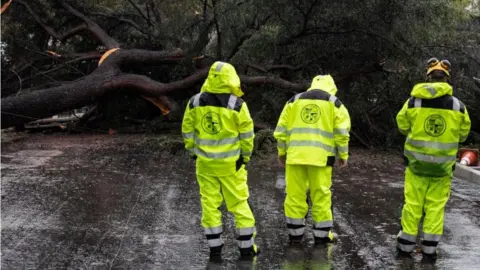
As of early February 2024, California has faced a state of emergency due to an atmospheric river storm that unloaded more than 10 inches of rain across Southern California, triggering flash flooding, downed trees, and mudslides. This event represents the second atmospheric river to hit the state within a single week, pushing the state’s infrastructure and emergency services to their limits. Governor Gavin Newsom declared a state of emergency in multiple counties, highlighting the severity of the crisis
The saturation of soil from previous storms, combined with the latest heavy rainfall, exemplifies how urban planning and environmental management are crucial in mitigating the impacts of such extreme weather events. Furthermore, the vulnerability of areas affected by wildfires to mudslides during these storms brings to light the interconnectedness of climate change, land management, and disaster preparedness.
The Science Behind Atmospheric Rivers
Atmospheric rivers are long, narrow regions in the atmosphere that transport most of the water vapor outside the tropics. These corridors of vapor can carry an amount of water vapor roughly equivalent to the average flow of water at the mouth of the Mississippi River. When these atmospheric rivers make landfall, they often release this water vapor in the form of rain or snow, leading to significant precipitation events. The recent storms in California are textbook examples of the impact atmospheric rivers can have, especially when they hit areas already saturated by previous rainfall.
Climate Change: Amplifying Extreme Weather Events
The frequency and intensity of atmospheric rivers in California are not occurring in isolation but are part of a larger pattern of extreme weather events being amplified by climate change. Rising global temperatures are increasing evaporation rates, leading to more moisture in the atmosphere. This excess moisture is a key ingredient for heavy precipitation events, including atmospheric rivers. Climate models suggest that as the planet continues to warm, we can expect these events to become more frequent and intense.
Environmental and Geoscientific Factors
The impact of atmospheric rivers is further influenced by environmental and geoscientific factors. For instance, urbanization in flood-prone areas can exacerbate the effects of flooding, as natural land cover, which absorbs rainwater, is replaced with impervious surfaces. Additionally, the state’s topography, including its mountain ranges and coastal plains, plays a crucial role in determining where and how much precipitation falls during these events.
Areas affected by wildfires are particularly vulnerable to mudslides during heavy rains. The loss of vegetation exposes soil to erosion, and when heavy rains arrive, the lack of vegetation can lead to rapid surface runoff, carrying mud and debris downhill, causing significant damage.
Looking Forward
The question of whether these severe weather events will continue in the future is met with a resounding yes by current climate projections. This underscores the need for adaptation and resilience in our communities and infrastructure. Investments in green infrastructure, such as permeable pavements, green roofs, and rain gardens, can help manage stormwater runoff more effectively. Additionally, restoring natural landscapes and fire-damaged ecosystems can reduce the risk of mudslides and flooding.
The situation in California is a direct manifestation of the scientific discussion on climate change’s role in amplifying extreme weather events. The atmospheric rivers that have wreaked havoc across the state are becoming more intense and frequent, a trend that is consistent with climate models’ predictions as global temperatures continue to rise. This real-life scenario offers tangible evidence of the urgent need for climate adaptation and resilience strategies, as outlined in the scientific exploration of atmospheric rivers and climate dynamics.
Shubham Rattan 05/02/2024
 the Roots
Leave a comment