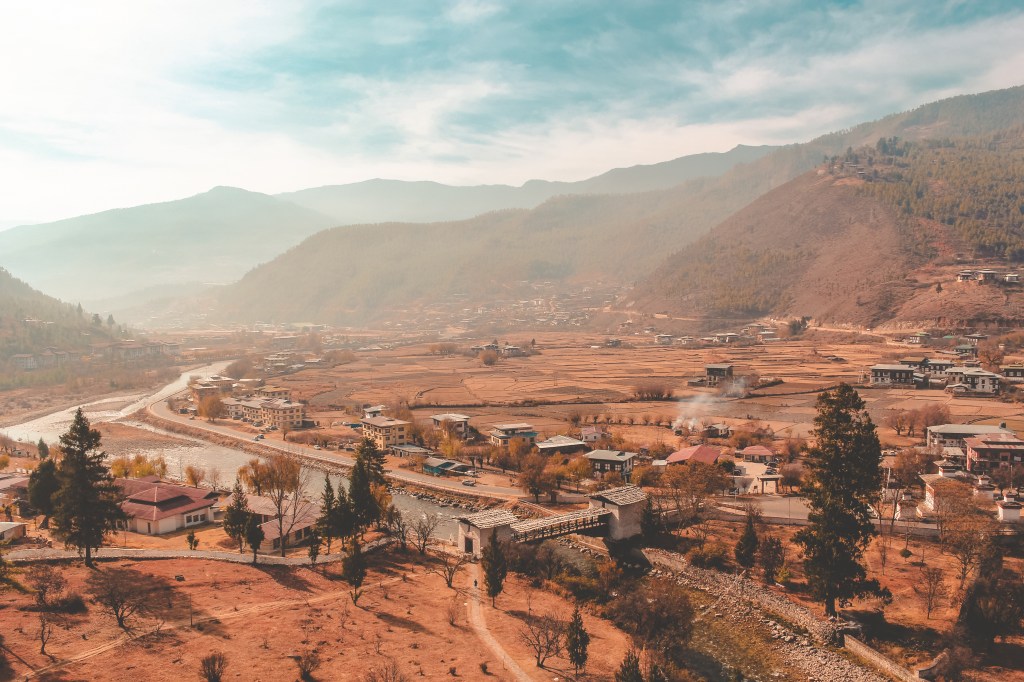
Bhutan, a small Himalayan kingdom nation, is renowned for its distinctive approach to economic development, which prioritizes Gross National Happiness (GNH) over traditional measures like Gross Domestic Product (GDP). This case study explores how Bhutan’s model integrates sustainable development principles into its economic policies, emphasizing environmental conservation, cultural preservation, and social welfare.
Sustainable Development Characteristics
Environmental Conservation: Bhutan’s constitution mandates that at least 60% of its land remains under forest cover, a commitment that has led to over 70% of the country being forested today. This approach not only preserves biodiversity but also ensures Bhutan’s status as a carbon-neutral country (Brooks, 2013).
Renewable Energy: Bhutan has harnessed its rich hydropower resources, promoting clean and renewable energy. Hydropower accounts for a significant portion of Bhutan’s revenue and is exported to neighboring countries, making a substantial contribution to the national economy.
Sustainable Tourism: Adhering to a ‘high value, low impact’ tourism policy, Bhutan charges a daily tariff to visitors, which funds its free healthcare and education systems. This strategy limits tourist numbers, protecting the country’s culture and environment from over-tourism.
Organic Farming Initiatives: The government encourages organic farming, reducing reliance on chemical fertilizers and pesticides, and promoting food security and ecological balance.
Successes of the Initiative
Since the implementation of Bhutan’s environmental conservation program, the nation has achieved several significant milestones. Notably, the country has maintained over 70% forest cover, surpassing the constitutional mandate of 60%, which has been pivotal in its designation as a carbon-neutral country (Brooks, 2013). Additionally, the program has contributed to the protection of numerous endemic species and the enhancement of carbon sequestration capabilities, reinforcing its global commitment to biodiversity and climate change mitigation.
To address the financial challenges posed by such ambitious environmental goals, Bhutan has utilized a mix of financial mechanisms. These include the establishment of a trust fund for environmental conservation, the promotion of sustainable tourism practices that generate revenue while minimizing ecological impact, and the leveraging of international grants and aid dedicated to green initiatives. These financial strategies have been crucial in sustaining the program’s initiatives amidst economic pressures.
The country’s GDP growth increased from 4.1% in 2021 to 4.7% in 2022 (Asian Development Outlook, 2023). Over the past decades, the average GDP growth rate was about seven percent per annum, making Bhutan one of the fastest-growing economies in South Asia (Druk Journal, n.d.).
Hydropower exports and sustainable tourism form a substantial part of Bhutan’s GDP. The country has harnessed its rich hydropower resources, promoting clean and renewable energy. The revenue from hydropower exports has been fundamental in achieving prosperity for the people of Bhutan (Bhutan Sustainable Hydropower Development Policy, 2020).
In terms of sustainable tourism, Bhutan follows a ‘high value, low impact’ tourism policy. The country charges a daily tariff to visitors, which funds its free healthcare and education systems. Despite the COVID-19 pandemic causing a significant drop in tourism in 2020, the sector has been identified as the backbone of private sector growth (BHUTAN TOURISM MONITOR, 2020).
Challenges Faced
Economic Vulnerabilities: Bhutan’s economy heavily relies on hydropower and tourism, making it vulnerable to environmental changes and global economic fluctuations.
Balancing Tradition and Modernization: As Bhutan modernizes, it faces the challenge of preserving its rich cultural heritage and traditional values against the influences of globalization.
Global Environmental Impact: Climate change poses a significant threat to Bhutan’s natural resources, despite its own robust environmental conservation efforts.
Conclusion
Bhutan’s approach to sustainable economic development offers a unique case study. Its emphasis on GNH rather than GDP challenges the conventional metrics of economic success and underscores the importance of environmental conservation, cultural preservation, and social well-being. Bhutan’s model demonstrates that integrating sustainability into economic policy is not only feasible but also beneficial for national well-being. This case study provides valuable insights into how countries can balance economic development with ecological and social imperatives, contributing to the global discourse on sustainable development.
References
Brooks JS. Avoiding the Limits to Growth: Gross National Happiness in Bhutan as a Model for Sustainable Development. Sustainability. 2013; 5(9):3640-3664. https://doi.org/10.3390/su5093640
Sriram Balasubramanian & Mr. Paul Cashin, 2019. Gross National Happiness and Macroeconomic Indicators in the Kingdom of Bhutan, IMF Working Papers 2019/015, International Monetary Fund. https://ideas.repec.org/p/imf/imfwpa/2019-015.html
Asian Development Bank. (2023). Asian Development Outlook (ADO) April 2023: Brighter prospects amid ongoing challenges. http://dx.doi.org/10.22617/FLS230112-3
Bhutan Sustainable Hydropower Development Policy. (2020). Bhutan Tourism Monitor 2020. Tourism Council of Bhutan. https://www.tourism.gov.bt/uploads/attachment_files/tcb_K5Y19KXy_BHUTAN%20TOURISM%20MONITOR%202020.pdf
Article by Shubham Rattan
 the Roots
Leave a comment