Join a geoscientist’s journey to Ellora Caves, where the ancient Buddha idol intertwines the marvels of historical art with lessons in environmental sustainability.
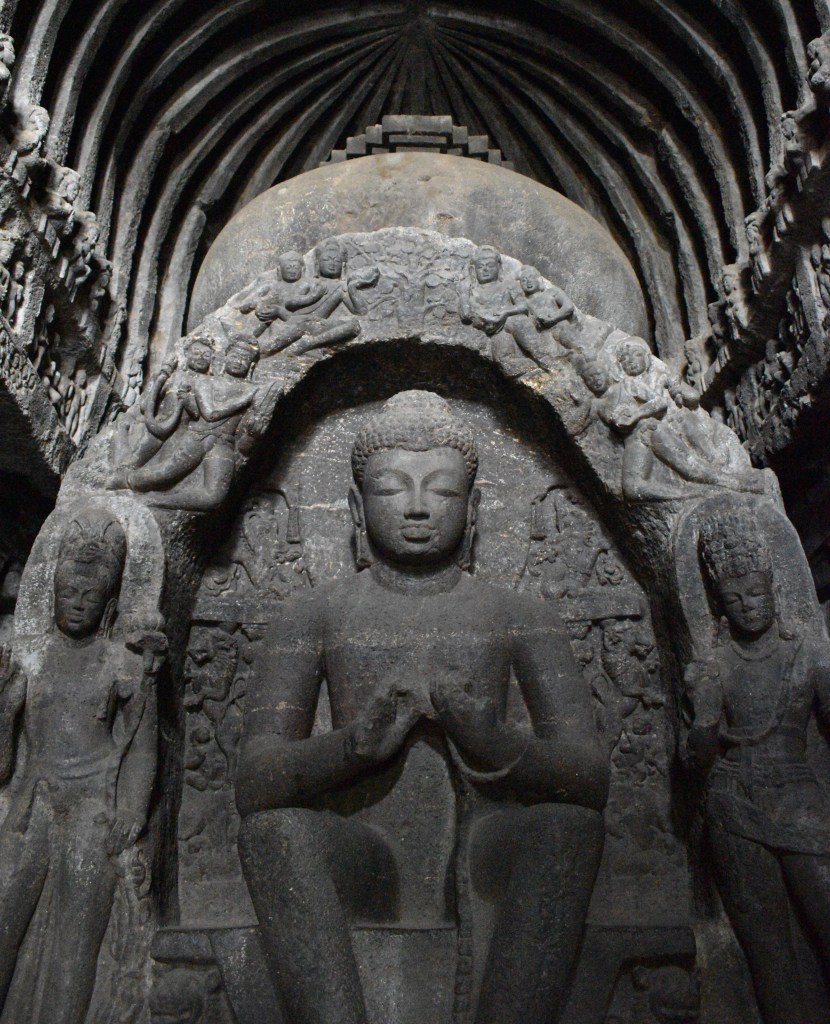
Introduction: Nestled in the basalt formations of the Western Ghats of Maharashtra, the Ellora Caves are a testament to the ingenuity of ancient artisans and the enduring beauty of nature’s canvas. As a geoscientist and avid explorer, my visit to this majestic site in March 2023 unveiled not just the awe-inspiring carvings of the Buddha idol but also imparted valuable insights into how history and environmental stewardship can coexist.
The Geological Canvas: The caves, over 1,500 years old, stand as a geological marvel, carved into volcanic basaltic formations. The natural durability of the stone has preserved the intricate details of the Buddha idol, showcasing the interplay between artistic expression and the robustness of the geological materials chosen by our ancestors. This choice of medium is a primitive yet profound example of sustainability, leveraging the longevity of geologically sourced materials.
The Idol’s Tale: The central figure of the Buddha, seated in serene meditation, is a powerful symbol of tranquility and resilience. Surrounded by attendants and carved directly into the cave’s walls, the idol is a frozen narrative in stone, echoing the teachings of mindfulness and harmony with nature. As I stood there, tracing the lines weathered by time, I couldn’t help but reflect on the idol’s silent sermon on impermanence and the cycles of nature.
Sustainability Carved in Stone: The construction of the Ellora Caves was an early exercise in environmental consideration. The artisans worked with the landscape, not against it, minimizing their ecological footprint. Today, this philosophy resonates with us more than ever as we grapple with sustainable practices in our daily lives. The idol, steadfast through centuries, prompts us to consider how our actions today will stand the test of time, much like these ancient wonders.
Preserving History and Ecology: I appreciate the dual responsibility to preserve our cultural heritage and the environment. The conservation efforts at Ellora Caves serve as a blueprint for modern eco-tourism, where cultural exploration goes hand in hand with ecological preservation. It’s a holistic approach, safeguarding the site’s historical significance while maintaining the natural geoscience that has cradled these sculptures for millennia.
Conclusion: The Buddha idol of Ellora Caves is more than just a relic; it is a reminder of the deep connection between our past, the earth’s geology, and the future we are carving. It challenges us to adopt a sustainable mindset, to ensure that the wonders we create, and the planet we inhabit, can be admired for generations to come. As we traverse through our own epoch, let us carry forward the legacy of the Ellora Caves—merging the artistry of humanity with the stewardship of the world around us.
Call to Action: Explore the Ellora Caves and embrace the blend of historical art and geoscience. Share your experiences and join the conversation on sustainability and cultural preservation. Together, we can shape a future that honors our past while nurturing our planet.
Keywords: Ellora Caves, Buddha Idol, Environmental Sustainability, Geological Wonders, Historical Art, Cultural Heritage, Geoscience, Eco-Tourism
Article by: Shubham Rattan
 the Roots
Leave a comment